


 Cart
Cart
 sales@molnova.com


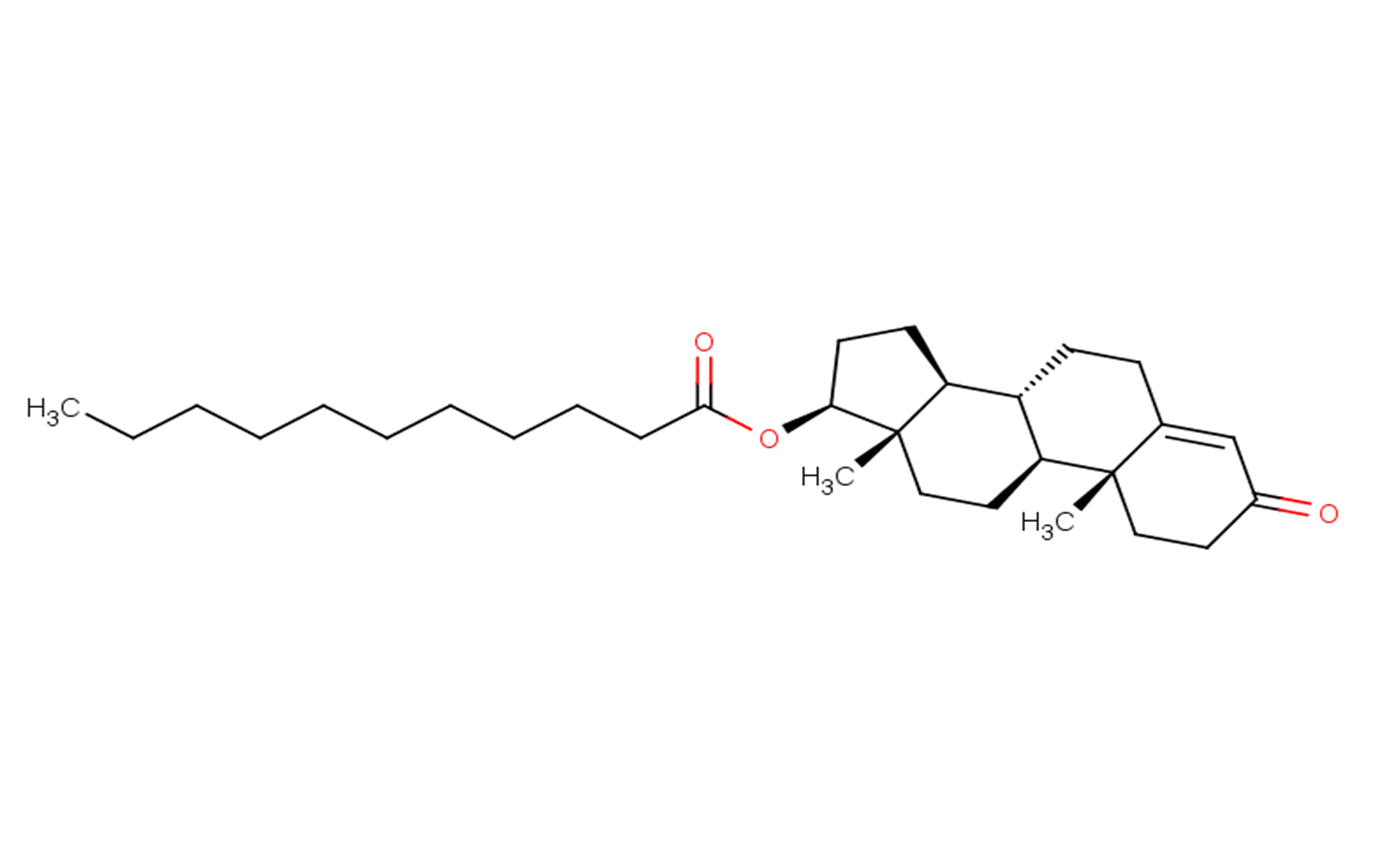
Testosterone undecanoate
CAS No. 5949-44-0
Testosterone undecanoate( —— )
Catalog No. M24589 CAS No. 5949-44-0
Testosterone undecanoate is a metabolite of Testosterone, which is a promising androgen for male hormonal contraception.
Purity : >98% (HPLC)
 COA
Datasheet
HNMR
HPLC
MSDS
Handing Instructions
COA
Datasheet
HNMR
HPLC
MSDS
Handing Instructions
| Size | Price / USD | Stock | Quantity |
| 500MG | 85 | In Stock |


|
| 1G | Get Quote | In Stock |
|
Biological Information
-
Product NameTestosterone undecanoate
-
NoteResearch use only, not for human use.
-
Brief DescriptionTestosterone undecanoate is a metabolite of Testosterone, which is a promising androgen for male hormonal contraception.
-
DescriptionTestosterone undecanoate is a metabolite of Testosterone, which is a promising androgen for male hormonal contraception.
-
In Vitro——
-
In Vivo——
-
Synonyms——
-
PathwayOthers
-
TargetOther Targets
-
RecptorOthers
-
Research Area——
-
Indication——
Chemical Information
-
CAS Number5949-44-0
-
Formula Weight456.71
-
Molecular FormulaC30H48O3
-
Purity>98% (HPLC)
-
SolubilityDMSO:Insoluble;Water:Insoluble
-
SMILESCCCCCCCCCCC(=O)O[C@H]1CC[C@@H]2[C@@]1(CC[C@H]3[C@H]2CCC4=CC(=O)CC[C@]34C)C
-
Chemical Name——
Shipping & Storage Information
-
Storage(-20℃)
-
ShippingWith Ice Pack
-
Stability≥ 2 years
Reference
1.Swerdloff R S , Wang C , White W B , et al. A New Oral Testosterone Undecanoate Formulation Restores Testosterone to Normal Concentrations in Hypogonadal Men[J]. The Journal of Clinical Endocrinology & Metabolism, 2020(8):8.
molnova catalog



related products
-
Sodium mesoxalate mo...
Mesoxalic acid is primarily located in the cytoplasm within the cell. Mesoxalic acid can be biosynthesized from malonic acid. Outside of the human body mesoxalic acid can be found in cereals and cereal products common pea and herbs and spices.
-
Coptisine
Coptisine treatment increases cell viability based on its reversal effect on the enhanced activity of Indoleamine 2, 3-dioxygenase.
-
Thrombin inhibitor 5
Thrombin inhibitor 5 (compound 385) is a thrombin inhibitor with IC50 values ranging from 0.1 μM to 1 μM, suitable for venous thromboembolism research.
